
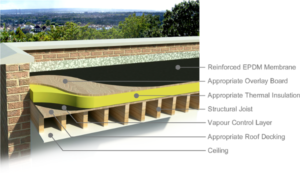
 Ethylene Propylene Diene Monomer (EPDM) is a rubber material similar to a tire tube membrane but is much thicker, stronger and usually reinforced with polyester.
Benefits:
- Easy and quick to install
- Flexible membrane
- Cost efficient
- Recyclable membrane
- Meets (UL) Underwriter’s Laboratories fire rating
Product Feature:
- Warranty ranges from 5 to 25 years
- Available in:
- 45, 60, & 90 mil thickness (non-reinforced)
- 45, 60, & 75 mil thickness (reinforced)
Application Methods:
- Ballasted EPDM
- Fully adhered EPDM
- Mechanically fastened EPDM
⭐ Building Owner Tip
Many EPDM roof leaks begin around flashing, rooftop equipment, or drains—not in the membrane itself. Regular inspections can identify these issues early, helping extend the life of your roof and avoid more costly repairs.
Frequently Asked Questions About EPDM Commercial Roofing in St Paul and throughout the state of Minnesota
What is an EPDM roof?
EPDM (Ethylene Propylene Diene Monomer) is a durable synthetic rubber membrane designed for commercial flat and low-slope roofs. Known for its flexibility and long-term weather resistance, EPDM has been a trusted commercial roofing system for decades and performs well in Minnesota’s changing climate.
How long does an EPDM roof last?
A professionally installed EPDM roof can typically last 20 to 30 years or more, depending on the quality of the installation, routine maintenance, and exposure to weather conditions. Regular inspections help identify minor issues before they become costly repairs.
Can an EPDM roof be repaired?
Yes. Many EPDM roofs can be successfully repaired if damage is identified early. Common repairs include sealing punctures, repairing seams, replacing flashing, and addressing drainage issues. A professional inspection can determine whether repair or replacement is the best long-term solution.
How often should an EPDM roof be inspected?
Rayco Construction recommends professional inspections at least twice each year—typically in the spring and fall—as well as after severe storms or high-wind events. Routine inspections help maximize the life of your EPDM roofing system and reduce the risk of unexpected leaks.